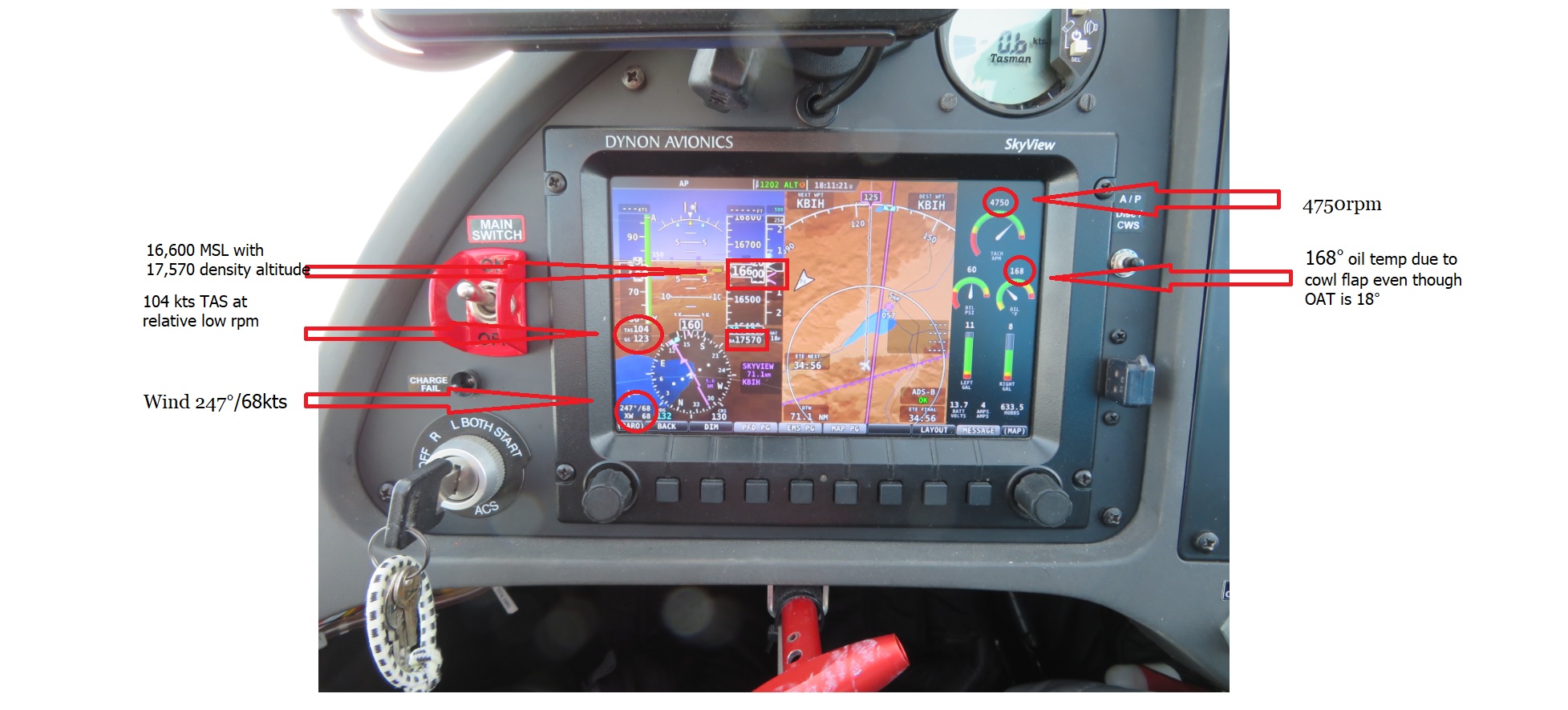
Started out early Saturday morning from MLB and traveled over to the west coast of FL at 2500 ft, building my confidence with the Skyview and autopilot controls.
Turning N after passing under the Orlando Class B, I followed the Gulf coast up to Tallahasee (KTLH) at 8500, picking up a great tailwind as I turned W. With a TAS of 115 kts I had a GS of 140 kts as I headed for Baton Rouge, landing at Hammond Northshore (KHDC), just N of Lake Pontchartrain (5h, 568nm, 20.1 gal, 4 gph, avg 114 kts).
I stopped for some lunch and then started out for Midland TX (KMAF) that afternoon. After a ceremonial crossing of the Mississippi I climbed to 10,500 to smooth out the ride.
The oxygen system gave me lots of options on altitude, and I settled in and enjoyed some tunes on the plane's stereo system.
I arrived 5.5 hours later at Midland TX amid a landscape of oil wells (5.5h, 610nm, 22.4 gal, 4.1 gph, avg 111 kts).
Next morning (day 2) I headed NW towards Seattle, crossing diagonally over NM at 10,500, encountering some of the first high ground of the trip.
My course later took me over Hobbs and Moriarty NM.
The terrain is high desert here, and it felt odd to be so high MSL but relatively low AGL. The mesas and canyons were spectacular.
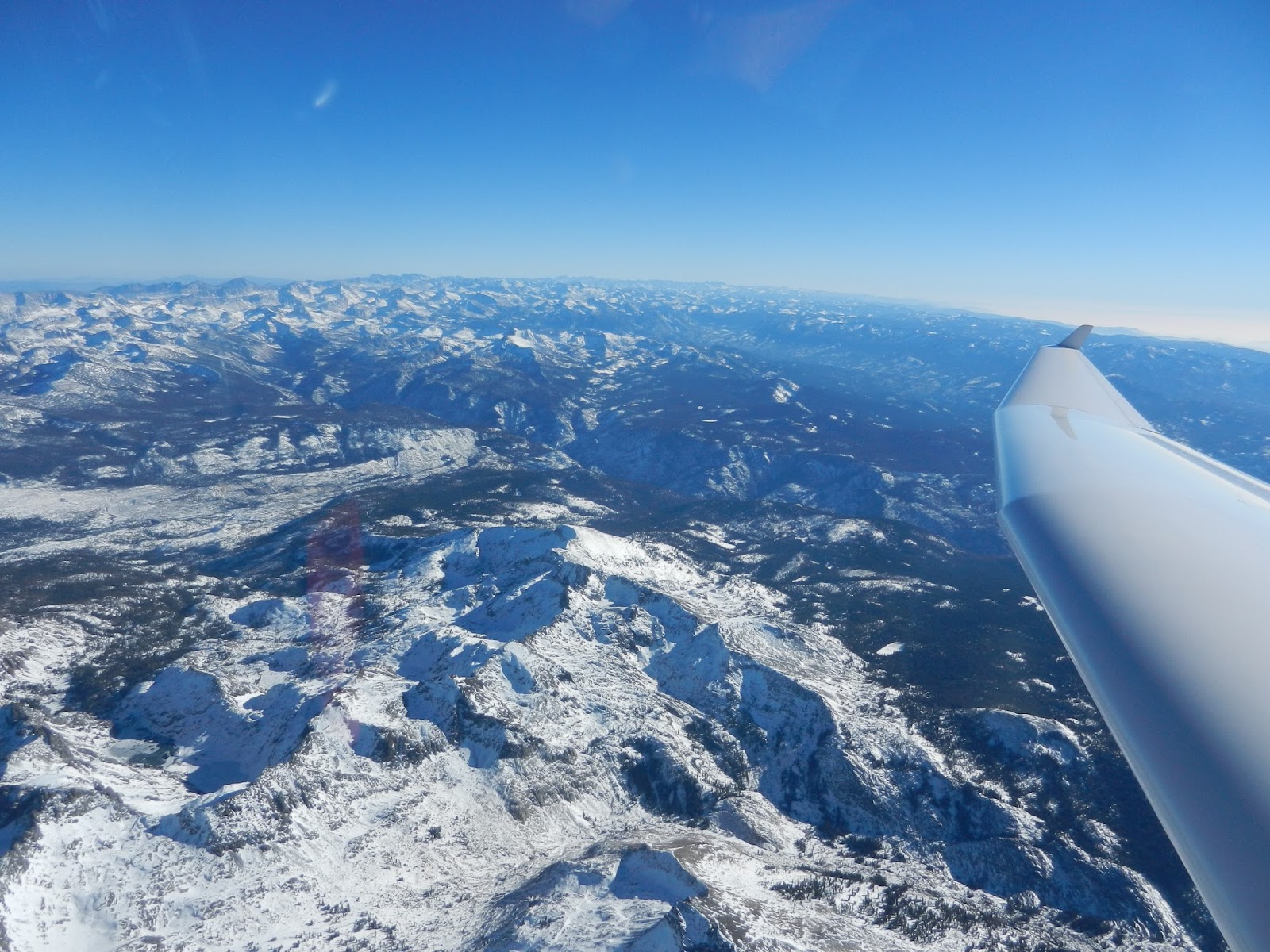
Once airborne again in the afternoon some serious terrain started to appear. The Wasatch Mts south of Salt Lake City combined with 10+ kt thermals drove me up to 14,500 to avoid the bumps.
After crossing the crest I found a nice smooth area over the Great Salt Lake. Next stop was Nampa ID (KMAN) near Boise. (4.5 h, 482nm, 19.4 gal, 4.3 gph, avg 107 kts).
It was now 5 PM on Sunday (day 2), and Seattle was within reach. A vigorous (for May) Pacific frontal system was racing me to Seattle, and it looked like it would get there first. My plan was to continue NW to the Columbia River in eastern OR and follow it through the Columbia Gorge to Portland under the decreasing ceiling, turn north, and duck under the OVC030 in Puget Sound up to SEA. Along the route there were several light prefrontal showers and the steadily lowering ceiling.
After poking through some nearly MVFR I emerged to find an eclipse!
Finally, the Columbia River appeared and I made my way W to Portland.
The next day was MVFR with rain as I sat out the warm sector. The trailing cold front which passed by 1800 pdt had some of the most impressive rain showers I have seen in a while. After clearing at 1900 I set out for home to Arlington WA (KAWO) under BKN025,
arriving an hour later at 2030.
Weather decides how you go. One of the considerations for my decision was my ability to handle crosswinds in such a light aircraft. The deciding factor for me was not so much the ceiling and visibility but the winds at landing. The final route was not what I had originally planned for in the days preceding, but it turned out to be a wonderful journey. The direct route would have taken me over more of the central plains into W Montana where the Rockies are the narrowest. The route that resulted from the weather, however, was a diagonal over some of the West's very high ground, but I was surprised that most of it was high plateau and not very mountainous. The Wasatch range was about the worst I saw. Nevertheless, the O2 was a must.
Bottom line... It's hard to believe I went 2500nm in just a little more than 2 days. I would not have wished to do that in a Cessna. In addition to being a great medium performance glider this is an awesome xc touring machine. The Phoenix was comfortable and efficient the whole way, and the standard stereo intercom is a great addition. Interestingly, I was able to plug in a simple FM radio and listened to NPR and classical stations nearly the whole distance (changing stations every 100 miles or so). I also recommend upgrading your headset to a NR Bluetooth model like the Zulu.2 since you have a surprisingly quiet ride and can make phone calls at appropriate altitudes. The Skyview glass panel is simply amazing, and I highly recommend it as well. It gives you a remarkable amount of flexibility and options as you fly, with a smooth and effective autopilot. If you live in the west, be sure to get the O2 system - riding higher than the bumps is a good thing.